Wednesday, April 30, 2014


Sunday, September 16, 2012
Where the Rubber Meets the Road
*Opinions and observations expressed in this blog are solely the author's, and are in no way attributable to any business associate, colleague or client.
 |
| Photo courtesy of AdamB@SilverScreenMarine.com |
After months of intense preparation, my engineer-dive team kicked off field operations in support of a long-awaited New York City harbour project that began stirring prior to my previous departure from the NYC scene. The project includes nearly every type of underwater waterfront repair currently in use in order to rehabilitate an immense pre-war structure built by the now-defunct Department of Docks. The diving work is some of the harbour's most challenging, crawling through mud in low to zero visibility, tight quarters, current and no direct access to the water surface. With the vast majority of work on the project located below the low tide elevation, the client is depending on our team of divers and topside inspectors to ensure that quality work is performed according to strict specifications. With multiple construction operations and a multitude of divers operating from various locations on a barge flotilla longer than a football field, we are keeping very busy. With new equipment to vet and operations to master, the dive team members are bringing their full skill set to the table every day to support the mission and get the job done, from database management and software programming to dive gear and audio-visual system maintenance. Each crew member has developed unique skills and contributions to meet new demands and have begun to coalesce into a tightly-knit and highly effective team .
Although I had acquired some experience with resident engineering and construction management in the waterfront sector over the years, engineer-divers industry-wide are typically more focused on the condition assessment side of things and lighter on the construction inspection experience. While the basic premise of donning dive gear to take an engineer's trained eye to the structure and communicate observations may be the same, this project has reminded me that construction inspection is an entirely different animal from conditions assessments or routine underwater investigations, traditionally the bread and butter of my line of work.
Typical waterfront condition assessment projects might entail an investigation and accompanying report for a structure on a one-time basis, or repeatedly over some multi-year cycle developed to monitor deterioration. The maintenance or repair recommendations and cost estimates provided to clients may or may not be acted upon, now or ever. Observations are a mere snapshot in time, and may be given only cursory consideration by different consultants that might follow. Life expectancies may be estimated, but possibly not revisited in a consistent and effective way to prove useful. Taken to the extreme, the machine that is our nation's biennial bridge inspections process involves a staggering amount of repetitive inspecting , reporting and monitoring that can easily carry maintenance recommendations through several engineers over dozens of cycles and many years of visits, sometimes with no apparent repair actions for all that effort.
Contrast the almost gauzy quality of the routine condition assessment to the cold, hard precision necessary in a construction inspection project. The contractor's dock builders, divers and crane operators are working in concert with the inspection divers and design engineers to actually build something. The measurements taken by the dive inspector directly and immediately impact the price paid, observations help determine the repair made, and reports lead to the decisions rendered and direction taken, possibly that same day. If the inspector makes a bad call, there could be repercussions to the work and they may be significant and immediate. In the routine bridge inventory world, where one lead inspector may filter through the information, write the report and hand it off to the client to be filed away until the next cycle, the observations of a construction inspection are typically analyzed and discussed at length by the entire inspection team as well as the contractor, and then reviewed with the design engineer, contractor and/or client to develop imminent actions. Condition assessments, routine investigations and cyclical structural inventories are inarguably important to maintaining our waterfront infrastructure and assets; however, construction inspection is simply put 'where the rubber meets the road'. *Opinions and observations expressed in this blog are solely the author's, and are in no way attributable to any business associate, colleague or client.
Friday, February 3, 2012
Rerunning
The peculiar part about returning to my old firm is coming back to reports I wrote over 10 years ago. Saw this pic of me on the Kill Van Kull back in 2002. I think I look younger now. ;)
Thursday, December 1, 2011
Visibility!
Working on a report today for a recent dive job in Cali, I came across this shot of me taken by backup diver. I don't believe I've dove water this clear in 10 years - the visibility is a bit shocking. I really like the shot... almost erie looking. Definitely one for the kids and grandkids someday.

Sunday, November 13, 2011
Goin back to Cali
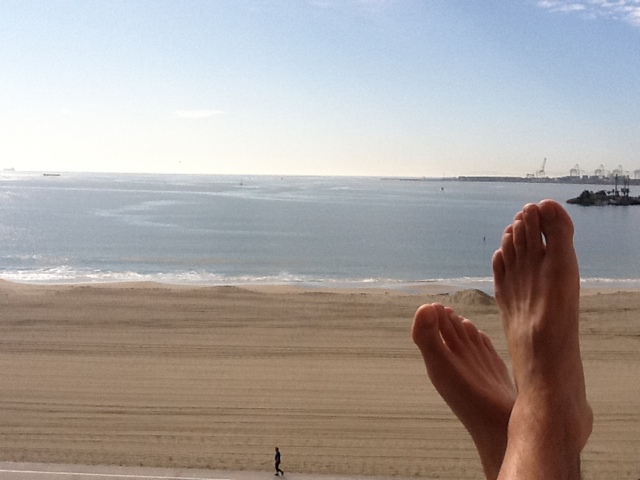
Had an oppurtunity to come back to the LA Long Beach area for a dive job. NYC project is delayed and family is not relocated yet, so it worked out. I was here a few years ago with the fam for my wife's tradeshow, when Dylan was only 4 and Gavin was still swimming round Tiff's belly. Nice area, especially Long Beach. Finally have a down day today to see the place during the daytime again! Anyway, job is going well... 6 hrs in the water yesterday, so recovering from a nice wetsuit rash today. All is well.


Saturday, October 29, 2011
Week 1 in The City
Just a few pics from week long inspection of nearly century old wharf on the East River in Manhattan. Good to be back diving in The City!


Monday, September 19, 2011
Winter's coming - some ice engineering thoughts
For an ice engineering overview as it pertains to waterfront structures, check out this Marine Dockage article:


Wednesday, August 17, 2011
Thank you Beastie Boys
Just wanted to thank the Beastie Boys for helping me through this pile of inspection reports... Mike D, if you're out there and read this - thanks. Sabotage at full blast over and over will get me through it!
http://www.youtube.com/watch?v=z5rRZdiu1UE
http://www.youtube.com/watch?v=z5rRZdiu1UE
Friday, July 29, 2011
iPad for inspection field data collection
Started using the first generation iPad without the 4G wireless for bridge inspection and general field work. Here’s some notes on what I’ve found so far:


- Extremely light and handy for climbing around bridges and embankments, although I need a waterproof case such as Otterbox or similar
- Generally very fast and intuitive… I handed it to assistant and he took off with it with very little orientation
- Camera is good enough quality for typical inspection reports; video/audio is good quality too (although can’t figure out a timestamp feature)
- Screen is excellent for outdoor use, in direct sun it’s readable, but really great under bridge or in shade
- Used the app “DocsToGo” to put about 70 empty reports on it, fill them in as we went, and then synched them back to office PC on our return – worked slick
- used the built-in notepad to do photo logs and misc notes – very fast and easy compared to laptop or gps-type device
- Tons of memory for storing maps, past reports, inspection manuals, etc.. anything you could possibly need on hand
- Able to check in on email if wifi was in range, typically at lunch or breaks near civilization
- Touch keyboard is very easy to use and fast, and it has the auto-fill feature which is handy for repetitive entries
- Video with audio was very handy for ‘notes to self’
- Used a rack mount in the vehicle for finishing/typing in between bridges – cost about $35 I think
- Tons of other useful apps such as weather channel, mapping, sketch on photos, etc… with solid internet, the uses are endless
All in all, it is an excellent field tool that I feel blows the laptop, thinkpad, tablet pc, gps handheld, etc out of the water – I’ll be looking to use it more and more in the future; however, I will likely upgrade to the iPad 2 and would recommend you go that route as well – it really needs to have the solid, full-time internet access to be fully functional and used to its full potential. Then you can be uploading inspection reports into bridge management systems as you go, which a lot of agencies are going toward – cloud service type approach. It also has a Facetime app that is similar to Skype but much faster and streamlined that can be used for onsite videoconferencing if you’ve got the 4G wireless going on. It has a cool feature for that also – push a button and it switches from the front facing to rear facing camera, so you can be talking and then show them what you’re looking at, then go back to conversation.


Interesting "green" erosion control

Monday, July 25, 2011
Watch out for traps (literally)!

Sunday, July 17, 2011
Some "different" type inspection photos using iPad built-in photo processor


I had high hopes for experimenting with the "thermal" camera, thinking it might work for picking up road deck delaminations, but not impressed. I suspect it's actually just picking up light relection.
Friday, July 1, 2011
Underwater Inspection - It's not all cracks and rebar
"Underwater bridge inspection - It's not all cracks and rebar"
As I write this, I am returning from North Dakota after performing underwater bridge inspections on the Red River. What made this inspection trip different from any other, and pertinent to this blog, is that two of the three dive team members are hydraulic engineers. More accurately, I am an ex-structural guy who now concentrates on water resources projects; therefore, perhaps rather than a hydraulic engineer, I am 'hyraulically inclined'. At any rate, the hydraulic slant to our team makeup helped to shine a unique light on bridge inspection work, illuminating areas that are perhaps less emphasized or closely observed by the traditional structural crew.
With something like two thirds of bridge failures being due to foundation undermining and scour, it stands to reason that underwater inspections are critical to public safety. While routine abovewater biennial inspections often include assessment and rating of channel conditions, the real investigation into the health of the bridge substructure and river at the crossing occurs during the underwater inspection. While most bridges with submerged substructure elements are on a routine five year cycle for underwater inspection, post-flood inspections are typically performed following major flow events to detect scour problems that may have arisen. An effective underwater inspection team will have not only expertise in material condition and deterioration, but an understanding of stream stability and bridge hydraulics.
As a hydraulically inclined bridge inspector and PE-Diver entrusted with safeguarding the traveling public, my primary focus is on the major threats to foundation stability such bridge scour. Here are some of the critical checks I make and items I focus on:
- Channel cross-sections. A very experienced NHI instructor once taught me that for any inspection of a bridge over water, if you can only make one single observation or measurement to assess its health, it should be the cross-sections. A scour hole may be too large in diameter for a diver to observe or detect in near zero visibility, but the cross-section soundings should pick up such changes in the streambed elevation.
- Footing, tremie seal and pile exposure. Exposure of the tops and sides of a footing and/or tremie seal is recorded and tracked, especially if the piers are known to be on spread footings. Exposure of support piles under the seal is cause for more immediate concern, and may instigate more structural analysis and remediation. Bear in mind most piles installed under grade are not coated or treated to protect against the corrosive and abrasive effects of exposure to streamflow.
- Bottom probes. The streambed condition around bridge piers is very important to observe and record, both for assessing current health and aiding future analysis efforts. Local scour holes around piers in a channel with an active bed during high flow events may fill themselves in with softer material as the flow subsides; therefore, the inspection diver should be probing with a rod around channel piers and looking for changes in the bottom material. A relatively flat sandy streambed with swaths of deep silt around the piers is a good indication of past scour, even if no depression is observable.
- Riprap. Designers need to know the type, size and extents of any riprap or scour countermeasures present. In developing scour protection designs and plans of action for scour crticial and unknown foundation bridges, it is helpful to know what protection is there and how it is performing.
- Floodplain piers. Underwater inspections crews often end their investigation at the highwater line, which during normal flow periods means only the channel piers are being assessed. Flood flows or a meandering stream can expose normally high and dry piers to scouring flows. Piers above the channel banks and in the floodplain typically have more shallow foundations and are not shaped or oriented well for handling flows. Hopping out of the boat and hiking up the banks may reveal large scour holes at piers and abutments that did not fill themselves in when the water receded. In fact, an attentive underwater inspection team may find themselves diving into a local swimming hole hundreds of feet from the river bank to find an undermined abutment.
- Stage, velocity and attack angle. The water level and peak velocity at the time of inspection can be very helpful to designers pouring through bridge inspection reports to develop scour monitoring programs and bridge closure triggers, since this information can be tied to nearby USGS gage stations. While flow direction is typically noted in underwater bridge inspection reports, it is similarly helpful to designers if attack angles are noted at each pier in sketches.
There is a whole lot more to effective underwater bridge inspections than cracks and rebar. When nearly two-thirds of failures are due to foundation undermining from scour, the bridge-river interaction is just as important as material deterioration. While the abovewater bridge inspection scene can oftentimes seem more about generating maintenance lists for local agencies, underwater inspections are undoubtedly aimed at avoiding catastrophic failures. The truly effective dive team, and dive inspector, will have a strong balance of structural and hydraulic expertise.
As I write this, I am returning from North Dakota after performing underwater bridge inspections on the Red River. What made this inspection trip different from any other, and pertinent to this blog, is that two of the three dive team members are hydraulic engineers. More accurately, I am an ex-structural guy who now concentrates on water resources projects; therefore, perhaps rather than a hydraulic engineer, I am 'hyraulically inclined'. At any rate, the hydraulic slant to our team makeup helped to shine a unique light on bridge inspection work, illuminating areas that are perhaps less emphasized or closely observed by the traditional structural crew.
With something like two thirds of bridge failures being due to foundation undermining and scour, it stands to reason that underwater inspections are critical to public safety. While routine abovewater biennial inspections often include assessment and rating of channel conditions, the real investigation into the health of the bridge substructure and river at the crossing occurs during the underwater inspection. While most bridges with submerged substructure elements are on a routine five year cycle for underwater inspection, post-flood inspections are typically performed following major flow events to detect scour problems that may have arisen. An effective underwater inspection team will have not only expertise in material condition and deterioration, but an understanding of stream stability and bridge hydraulics.
As a hydraulically inclined bridge inspector and PE-Diver entrusted with safeguarding the traveling public, my primary focus is on the major threats to foundation stability such bridge scour. Here are some of the critical checks I make and items I focus on:
- Channel cross-sections. A very experienced NHI instructor once taught me that for any inspection of a bridge over water, if you can only make one single observation or measurement to assess its health, it should be the cross-sections. A scour hole may be too large in diameter for a diver to observe or detect in near zero visibility, but the cross-section soundings should pick up such changes in the streambed elevation.
- Footing, tremie seal and pile exposure. Exposure of the tops and sides of a footing and/or tremie seal is recorded and tracked, especially if the piers are known to be on spread footings. Exposure of support piles under the seal is cause for more immediate concern, and may instigate more structural analysis and remediation. Bear in mind most piles installed under grade are not coated or treated to protect against the corrosive and abrasive effects of exposure to streamflow.
- Bottom probes. The streambed condition around bridge piers is very important to observe and record, both for assessing current health and aiding future analysis efforts. Local scour holes around piers in a channel with an active bed during high flow events may fill themselves in with softer material as the flow subsides; therefore, the inspection diver should be probing with a rod around channel piers and looking for changes in the bottom material. A relatively flat sandy streambed with swaths of deep silt around the piers is a good indication of past scour, even if no depression is observable.
- Riprap. Designers need to know the type, size and extents of any riprap or scour countermeasures present. In developing scour protection designs and plans of action for scour crticial and unknown foundation bridges, it is helpful to know what protection is there and how it is performing.
- Floodplain piers. Underwater inspections crews often end their investigation at the highwater line, which during normal flow periods means only the channel piers are being assessed. Flood flows or a meandering stream can expose normally high and dry piers to scouring flows. Piers above the channel banks and in the floodplain typically have more shallow foundations and are not shaped or oriented well for handling flows. Hopping out of the boat and hiking up the banks may reveal large scour holes at piers and abutments that did not fill themselves in when the water receded. In fact, an attentive underwater inspection team may find themselves diving into a local swimming hole hundreds of feet from the river bank to find an undermined abutment.
- Stage, velocity and attack angle. The water level and peak velocity at the time of inspection can be very helpful to designers pouring through bridge inspection reports to develop scour monitoring programs and bridge closure triggers, since this information can be tied to nearby USGS gage stations. While flow direction is typically noted in underwater bridge inspection reports, it is similarly helpful to designers if attack angles are noted at each pier in sketches.
There is a whole lot more to effective underwater bridge inspections than cracks and rebar. When nearly two-thirds of failures are due to foundation undermining from scour, the bridge-river interaction is just as important as material deterioration. While the abovewater bridge inspection scene can oftentimes seem more about generating maintenance lists for local agencies, underwater inspections are undoubtedly aimed at avoiding catastrophic failures. The truly effective dive team, and dive inspector, will have a strong balance of structural and hydraulic expertise.
Thursday, June 23, 2011
Even the little guys need attention too...


Tuesday, June 7, 2011
Following up on the digital oranges...

Thursday, May 26, 2011
"north country hydrosurvey"... this is how we do it up hyinder in the woods..

Tuesday, May 10, 2011
Monday, May 2, 2011


Wednesday, April 27, 2011
Scuba inspection hints and gadgetry
I just came off of some underwater bridge inspections in Florida using the SCUBA approach. I don't go scoobie-doo for work very often, but it works well for the small bridge spans and slow-moving clear waters of the Florida intercoastal and canals. Thanks go out to the Florida dive crew that brought me up to speed on safe practices down there. Besides the established safety guidelines and recommendations out there (see OSHA, ADCI and USACE) regarding manning and communications, here are some helpful tips and gadgetry to make this inspection method go more smoothly and safely.
1. Underwater slate - works very well for short term note-taking between surfacing to relay to topside crew. It's a good idea to take photos of the notes prior to erasing, in case later reference is needed.
2. Pony bottle (20 cu. ft.) with dedicated regulators for back up emergency air supply - this is now part of OSHA dive regs and seems to be becoming common place among recreational divers as well. The 2nd stage for this bottle can be bungeed around the neck like cave-divers do, or just clipped on the BC close to your face like I did. Of course, with the octopus I had 3 mouthpieces clipped close to my face, so make sure you know which one you're breathing off of!
3. Helmet - I started donning my climbing helmet after a few bridges just to provide a mount for my video camera (see next item), but quickly grew attached to having it on. Being a hardhat diver, the climbing helmet gave me a safe and reassuring feeling to have something on my skull besides a swim cap. I thought it would be unfortable underwater, but in fact I hardly even noticed it was there and inadvertantly banged it off piles frequently. It's not an industry requirement to wear head protection when on SCUBA, but I think I'm going to incorporate it into my normal gear. A colleague in another company lost a good friend who was inspecting an outfall pipe on SCUBA in a pond with zero viz. He dropped the camera on ascent, and upon descent to retrieve it, hit his head hard on the pipe end, lost consciousness, spit out the regulator and drowned.
 Be Safe out there!
1. Underwater slate - works very well for short term note-taking between surfacing to relay to topside crew. It's a good idea to take photos of the notes prior to erasing, in case later reference is needed.
2. Pony bottle (20 cu. ft.) with dedicated regulators for back up emergency air supply - this is now part of OSHA dive regs and seems to be becoming common place among recreational divers as well. The 2nd stage for this bottle can be bungeed around the neck like cave-divers do, or just clipped on the BC close to your face like I did. Of course, with the octopus I had 3 mouthpieces clipped close to my face, so make sure you know which one you're breathing off of!
3. Helmet - I started donning my climbing helmet after a few bridges just to provide a mount for my video camera (see next item), but quickly grew attached to having it on. Being a hardhat diver, the climbing helmet gave me a safe and reassuring feeling to have something on my skull besides a swim cap. I thought it would be unfortable underwater, but in fact I hardly even noticed it was there and inadvertantly banged it off piles frequently. It's not an industry requirement to wear head protection when on SCUBA, but I think I'm going to incorporate it into my normal gear. A colleague in another company lost a good friend who was inspecting an outfall pipe on SCUBA in a pond with zero viz. He dropped the camera on ascent, and upon descent to retrieve it, hit his head hard on the pipe end, lost consciousness, spit out the regulator and drowned.
4. GoPro Helmet Camera - this was a birthday present a few year back to capture fun footage of mountain rides on my motobike. I've never used it for that, but it's come in handy for work above and below water. It attaches easily to my climbing helmet, and you can't even feel it's there underwater. The housing is waterproof to 100 ft, and the camera is wide angle HD, capable of stills and video with audio. Downsides are that it has no zoom function, needs relatively clear water and lots of light, and there is no instant playback. It has a habit of shutting off prematurely if the batteries aren't absolutely fresh and new as well, which can be frustrating when you don't have time to stop and check it constantly. I wouldn't use it as my primary underwater video if it's a required deliverable for the job, but it's good for a record - it holds about an hour of video at a time. I use it alot above water without the housing as a sort of visual voice recorder for important items during inspections, and the footage for climbing inspections is awesome. Short sample underwater video clip is found at http://www.youtube.com/watch?v=kdk7sQZm-rs
Google 'GoPro Helmet Camera' to find out more.

Wednesday, March 16, 2011
Car-armoring?

Subscribe to:
Posts (Atom)